
TELEPHONE DATA AND POWER BI
Conduct a structured analysis of call volume, availability, and temporal distribution.
Depending on the system, telephone systems provide various types of information about incoming and outgoing calls, times, call durations, and organizational assignments. We review the available data, process it according to industry standards, and use it to develop Power BI reports for service, sales, and organizational purposes.
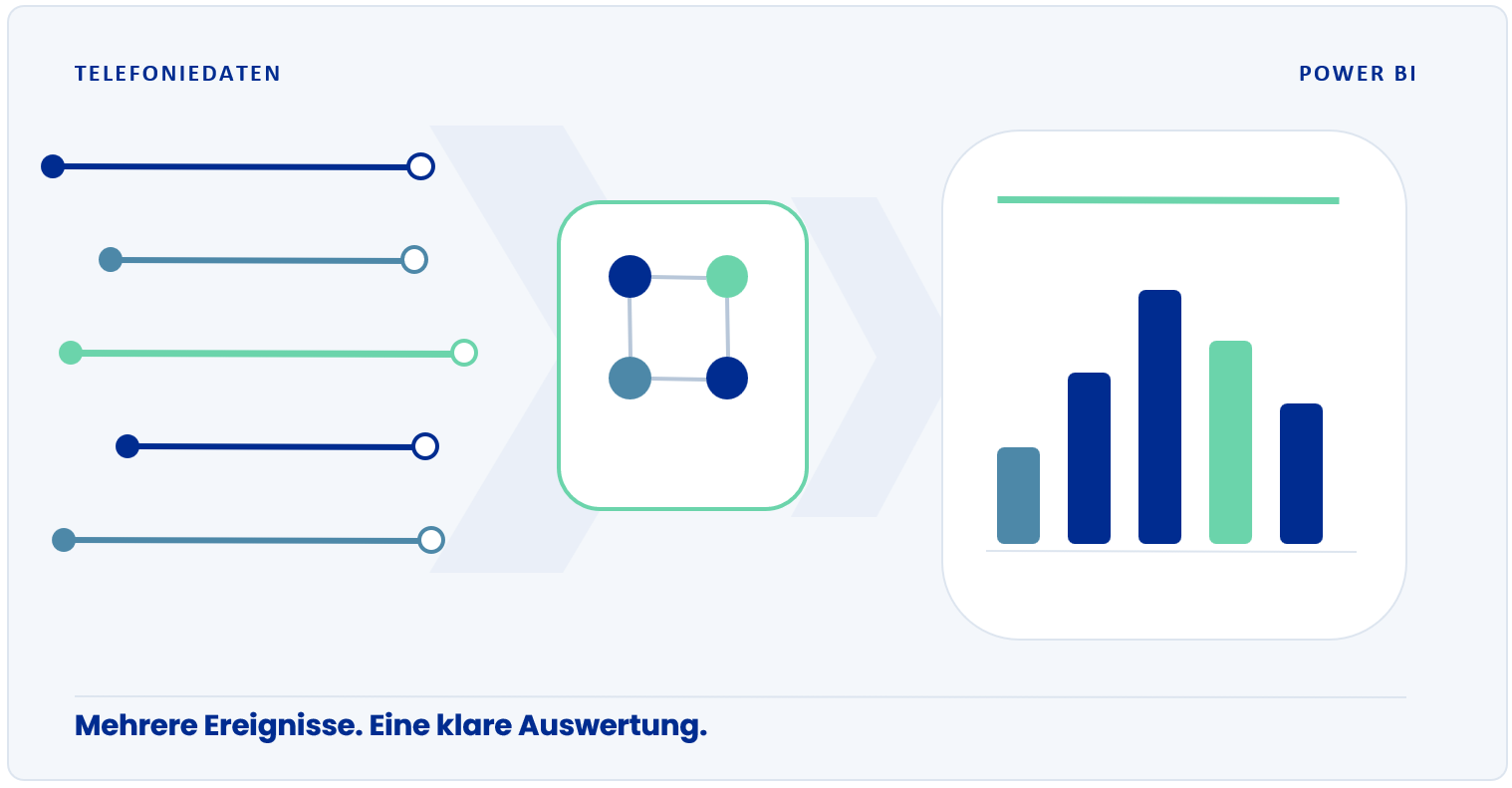
UNDERSTANDING CALL EVENTS
An incoming call may start at a central number, ring in a call group, be forwarded, and finally be answered by an extension. Depending on the phone system, this process can involve several technical events that must first be linked together to form a single call sequence.
Only once it has been clearly defined how answered, missed, forwarded, or very short calls are to be accounted for can meaningful metrics be derived. These technical rules form the basis for subsequent analysis using Power BI.
Schematic illustration. Call logs depend on the configuration of the phone system and the available data.
What matters is not only what data the telephone system provides, but also how individual call events are interpreted from a technical perspective.
REPORTING WITH POWER BI
Using a technically standardized data set, telephony data can be analyzed from various perspectives. The types of analyses possible depend on the information provided by your phone system, the existing organizational assignments, and your specific questions.
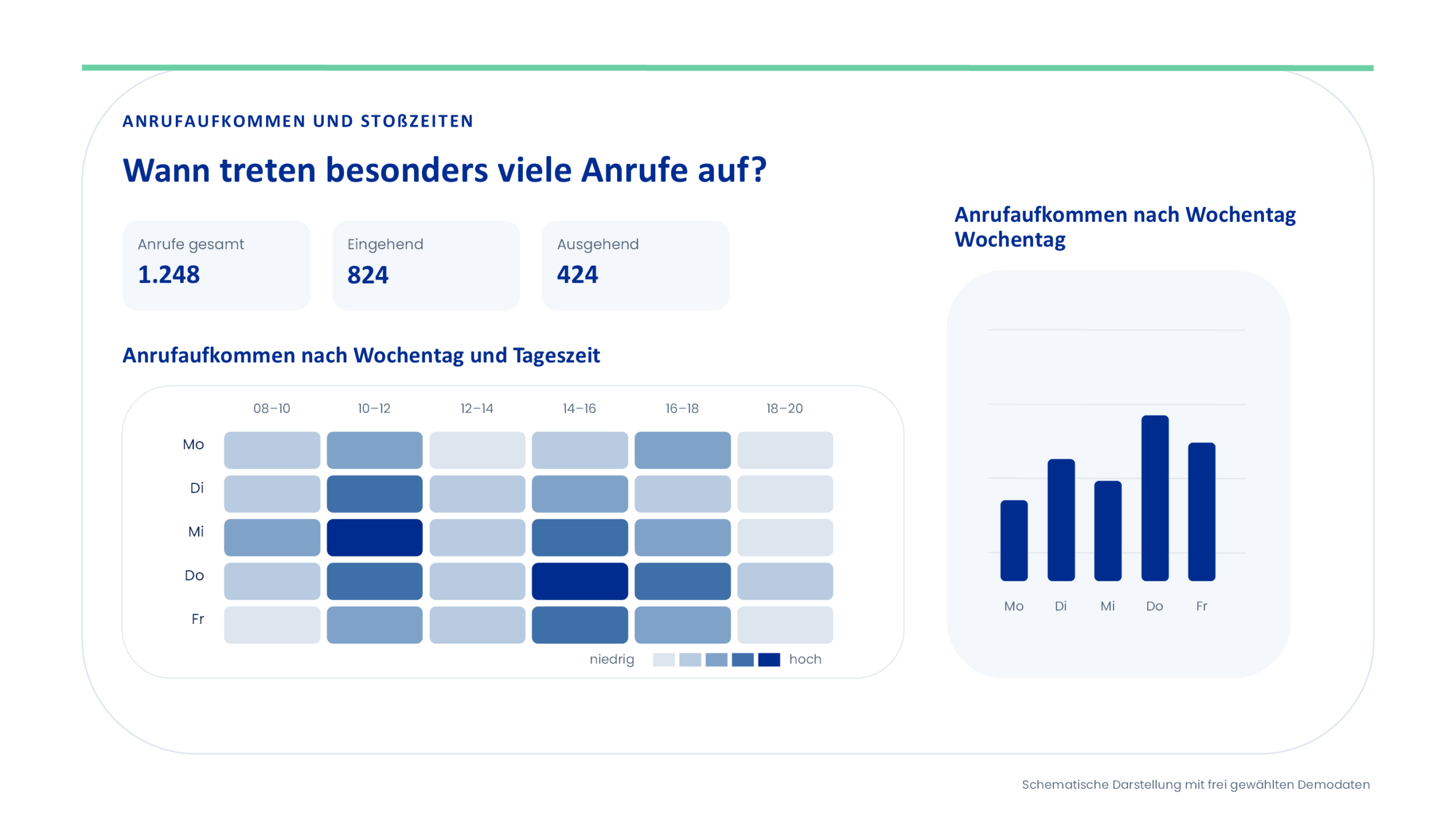
Review incoming and outgoing calls by time of day, day of the week, or time period. This will show you when call volumes are particularly high and how they change over time.
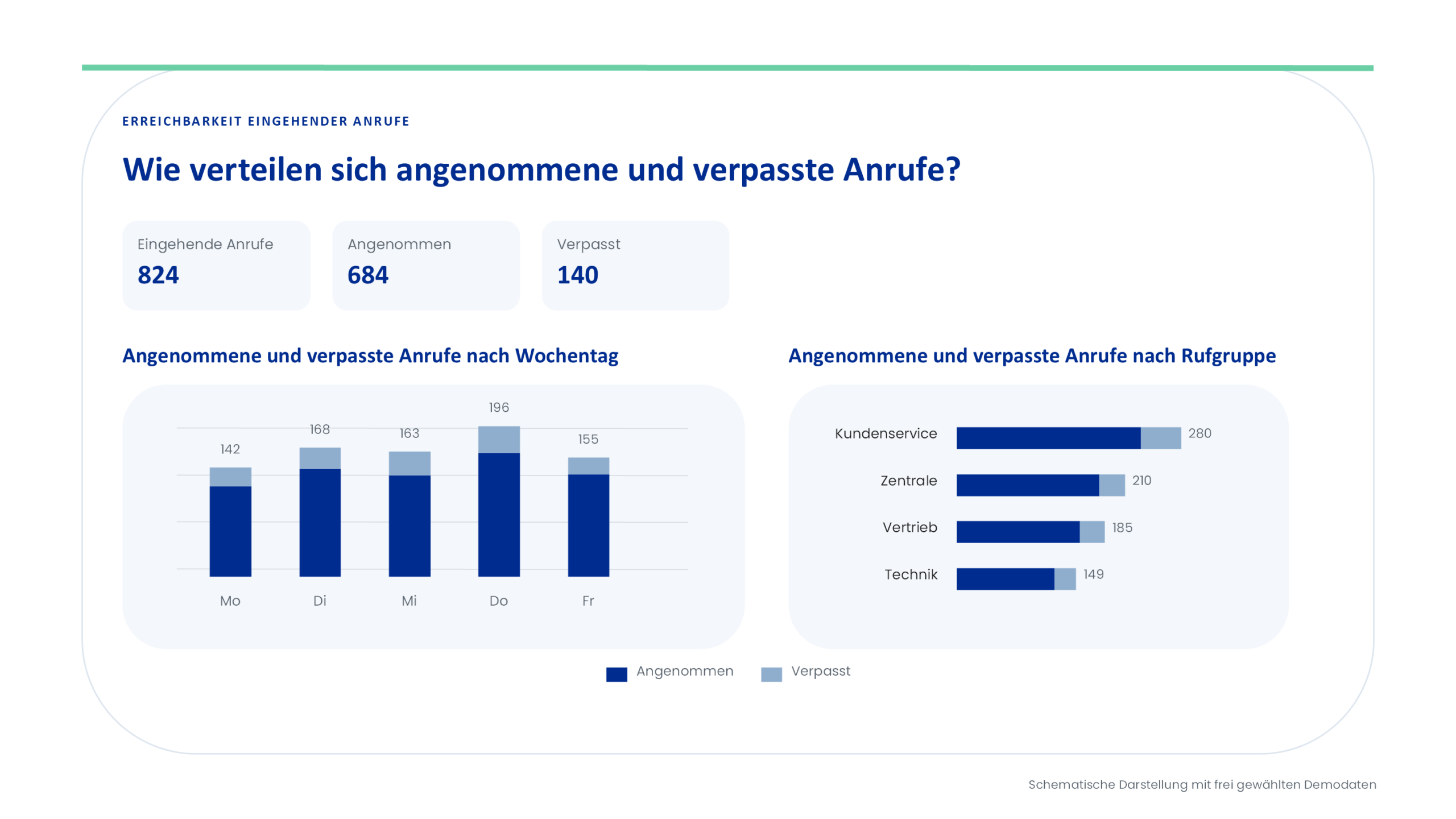
Analyze how incoming calls are handled and identify any anomalies in specific time periods or organizational units. Call transfers and multi-step call flows are taken into account to the extent that the available data allows.
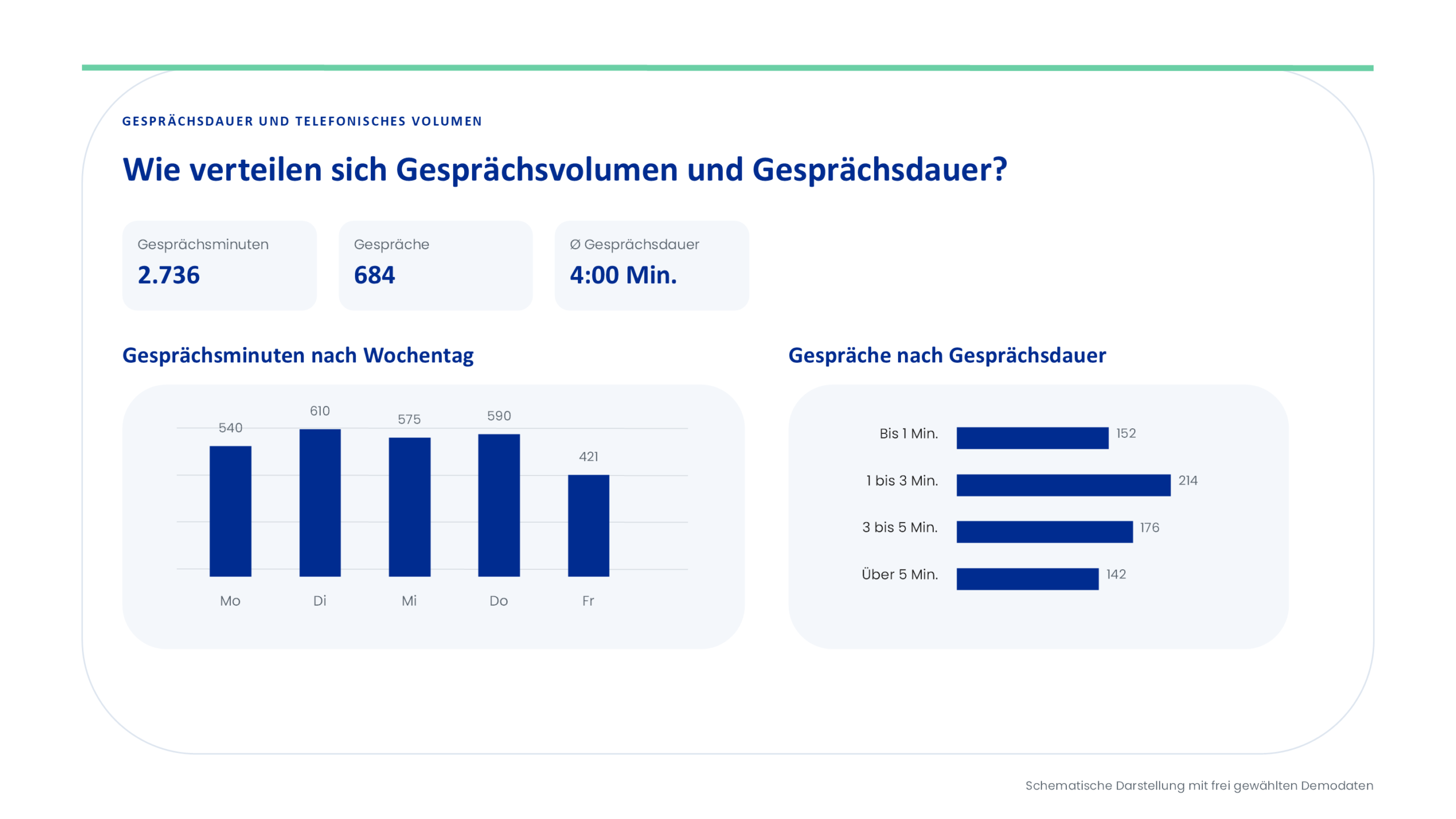
Examine how call times are distributed across different time periods and organizational units. Total duration, average call duration, and customizable duration categories help you categorize the volume of telephone communication in a nuanced way.
Compare call data by call groups, teams, locations, or other areas of responsibility. This reveals differences in call volume and availability at organizationally relevant levels.
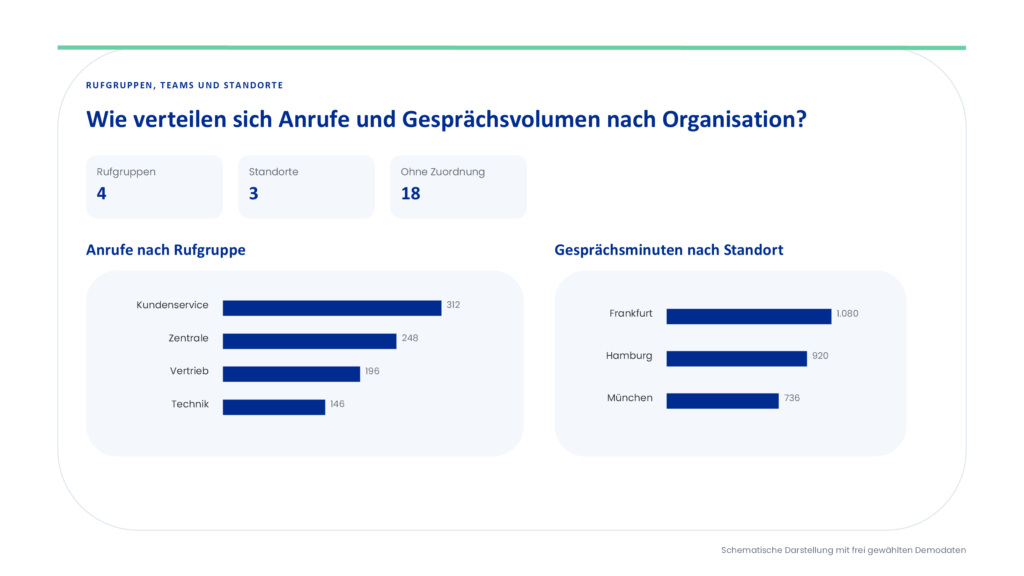
Depending on the available call history data, we can also analyze ring times, wait times, and call transfers. We use the existing data and mappings to determine whether call data can be reliably linked to shared CRM, service, or scheduling data.
DATA PROCESSING AND REPORTING
The information provided by a telephone system depends on the specific system and its configuration. We review the available data, classify call events and status values according to technical criteria, and establish the necessary organizational assignments.
Building on this, we organize the relevant information in a structured manner, align key metrics, and establish a suitable foundation for analysis using Power BI.
We review which data fields, time stamps, status values, and history information the phone system provides. This makes it clear which information can be used for the intended analyses.
Together, we determine how to account for call transfers, very brief connections, or multiple events within a call history. This results in clear definitions for calls, conversations, and missed contacts.
Extensions, phone accounts, and call groups are assigned to teams, locations, or other areas of responsibility to the extent possible and as technically feasible. In doing so, we determine the level of organizational detail required for reporting.
Based on the agreed-upon definitions and classifications, key performance indicators and Power BI reports are generated for the intended recipients. Updates, level of detail, and access rights are defined in accordance with the business requirements.
The reporting solution is not based on a rigid standard model, but rather on the available data, the business definitions, and the intended analyses.
PRACTICAL EXAMPLE: STARFACE
In a specific Starface project, the provided telephony data was imported, verified, and prepared for technical analysis. The data came from JSON exports, and their structure and the information they contained were first organized.
Call information was then linked to extensions and organizational assignments. Based on this, call volume, call duration, and temporal and organizational distributions were visualized in Power BI.
IMPLEMENTED IN A PRACTICAL PROJECT
Data imported
JSON Exports from Starface
Information Assigned
Extensions and Organizational Units
Developed analyses
Call volume, call duration, and temporal and organizational analyses in Power BI
Starface is a concrete, real-world example. We also examine other phone systems to determine what data is available and how it can be used for the desired analyses.
PRIVACY AND PERMISSIONS
Telephony data may contain detailed information on call times, call durations, extensions, and organizational assignments. The data imported into Power BI and the level of detail at which it is displayed should therefore be tailored to the business purpose and the intended audience.
For many issues, aggregated analyses by time period, call group, team, or location are sufficient. Detailed views containing personal information are not automatically included in the reporting and should only be provided if there is a clear business rationale and agreed-upon policies in place.
The goal is to produce an analysis that highlights the necessary relationships without providing more detailed information than is required for the specific research question.
The analysis focuses on structured telephony data and metadata. Call content is not included in the reporting approach described.
FREQUENTLY ASKED QUESTIONS
That depends on what data the respective phone system provides and how it is structured. Using a representative data export, we determine what information is available, how it can be categorized by subject matter, and what analyses can be based on it.
For an initial assessment, information about the telephone system in use, a representative data export, and the most important technical questions are helpful. In addition, it should be clarified which call groups, extensions, teams, or locations are relevant for the analysis.
If appropriate data and linking options are available, call data can, for example, be supplemented with shared information from CRM, service, or planning processes. The specific relationships that can be reliably displayed are determined based on the respective data set and the existing mappings.
How often the analysis can be updated depends on the data provided by the phone system, the scope of the export, and the technical requirements. The project team will determine the intervals at which the data should be provided and prepared for Power BI.
PLANNING TELEPHONY REPORTING TOGETHER
Whether call volume, availability, call duration, or organizational distribution can be analyzed depends on the available data and business requirements. Together, we’ll assess the current situation and discuss which Power BI analyses would be most useful for your phone system.